Camera-optional, every session: how NEO lessons work
There is a sentence that comes up in nearly every conversation with a parent considering Nudge Education Online (NEO). They say it slightly nervously, often near the end, like they’re not sure whether to ask. “Will she have to put her camera on?”
The answer is no. Not on her first day, not on her last day, not “just for registers”, not as a condition of the lesson, not on a soft promise that she’ll grow out of it. Cameras are optional in every live session at NEO. We mean it in the strong sense.
This post is a longer answer to why, because the short answer doesn’t quite explain itself.
Why we built camera-optional this way
A lot of the young people we work with have arrived at us through some form of EBSNA — emotionally based school non-attendance. For many of them, the camera is not a small thing. It is the thing. The moment a teacher asks “can you put your face on for the register?” can be the moment the nervous system steps back from the lesson and doesn’t return for a week.
The official thinking in some online settings is that camera-on is a proxy for engagement: you can see whether the young person is there, whether they’re following, whether they’re alright. That logic is intuitively appealing and, in our experience with this cohort, mostly wrong. The thing it proxies for — engagement — is observable through other, less intrusive means. Whether your daughter is participating in the chat, completing the in-lesson task, submitting work, asking a question, sending a private message to the practitioner — those are all visible to the teacher in real time. None of them require her face to be on.
The other reason is more straightforward. Asking a young person to make their face visible is asking them to be visually exposed in a way that, for a brain in the middle of recovering from school-based overwhelm, is not free. We don’t ask them to pay that price to be allowed to learn.
What “optional” actually means in practice
A few specifics, because “optional” can drift if it isn’t named.
She is not asked to justify camera-off. The teacher doesn’t ask why. The practitioner doesn’t ask why. We don’t have a private system where “camera off too often” gets a quiet flag. Camera off is a complete answer to the question of whether her camera is on.
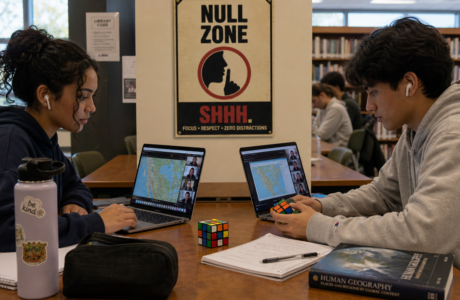
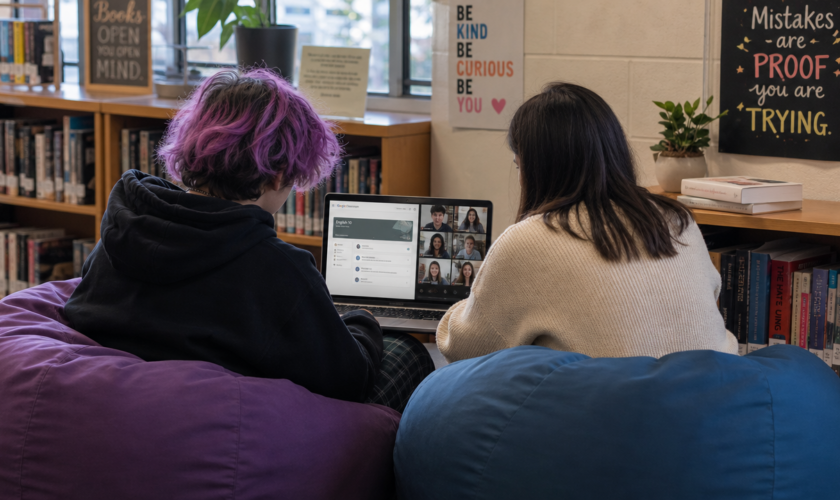
Other ways of being visible are fine. A still image. A coloured square. An avatar. The first letter of her name. Whatever feels okay this term. We make the platform handle all of these. None of them flag any concern to anyone.
Camera-on is also fine, on her terms. Plenty of our learners do have their camera on, all of the time or some of the time. That is also their decision, and they can change it from session to session. Some have their camera on at the start of a lesson and off for the working part of it. Some have it on for Maths and off for English. None of these are remarkable; all of them are fine.
Cameras-on isn’t used as a tool for the teacher. We don’t run “everyone on for the warm-up”. We don’t ask “can you show me you understood by putting your camera on for a second”. The lesson doesn’t depend on it.
How we know what’s going on for her
The honest follow-up question from parents is the right one: if she’s off camera most of the time, how do you know she’s okay? The answer has several parts.
Her named practitioner has a regular weekly check-in with her — once a week, twenty minutes, just the two of them. That is the dedicated, low-pressure space to talk about how the week has been. The relationship is the early-warning system, not the camera.
The Student Success Coordinator runs a short morning welcome each day. Voluntary. Not a lesson. Familiar face at the start of the day. Anyone who didn’t make it gets a friendly check-in.
Every session has session-level logging — attendance, engagement signals, anything that needs flagging to the safeguarding lead — that gets written up the same day. We can see when something has shifted. We do, sometimes, pick up the phone.
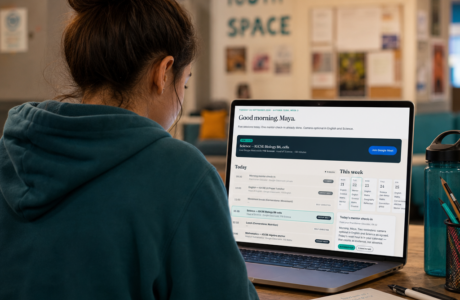
And the platform shows her work — submitted, in-progress, completed, paused. Engagement isn’t invisible. It is just observable through what she’s doing, not what she’s showing.
What we’d ask of you, in return
One thing that helps. If she has a bad morning — and she will, because she’s a young person — please tell us. Not as a problem to be solved, but as context. A message to the practitioner, a note in the platform, a quick email. Then today’s day can be designed for today.
If you’d like to see how camera-optional sits inside a real Tuesday, our open day demo walks through it — pick “Enter as a learner”. And when you’re ready, register your interest at nudgeeducation.online.
More articles
Go to the blog