Friday is Cornerstones Day: a different kind of day
Anyone looking at the Nudge Education Online (NEO) timetable for the first time notices that Friday is different. Monday to Thursday is four 45-minute live sessions per day, scheduled breaks, subject-by-subject. Friday is Cornerstones Day.
This post explains what Friday is, why we built it the way we did, and what your young person is actually doing in those Friday hours.
The short version
Friday is a structured day given over to the Six Cornerstones — the elements we believe make a week of learning sustainable rather than depleting: Connection, Movement, Creativity, Reflection, Rest, Nutrition.
Specifically, Friday includes:
- Relational Intelligence — explicit work on understanding ourselves and others; sometimes in small-group conversation, sometimes through structured exercises
- Digital Skills — beyond using a laptop, the skills of being online thoughtfully: privacy, judgement about sources, presenting work, collaborating
- RSHE — Relationships, Sex and Health Education, delivered in line with statutory requirements but designed for a cohort with our particular profile of needs
- SDG projects — Sustainable Development Goals, used as a frame for cross-disciplinary projects that take a question and pursue it across weeks
- Creative work — making things; sometimes individually, sometimes as a group; visual, written, audio, video, mixed
It is structured and there are scheduled sessions. It is also less compressed than Monday to Thursday. Some of Friday is independent work building on a project; some of it is a small-group conversation; some of it is a piece of creative making with a clear outcome.
Why we built Cornerstones Day this way
The four-day live-teaching week is a deliberate design decision. We don’t think running five identical days of live subject teaching is the right shape for our learners. Four days of structured subject teaching, with a meaningfully different Friday, is.
There are three reasons.
1. The Cornerstones are not extras. If the framework matters — and we think it does — then it deserves a day. Folding Connection, Reflection, Creativity, Rest and the rest of it into the margins of the academic timetable is how those things get lost. Cornerstones Day says: this is here, this matters, this is what the week is built on.
2. Pacing. A young person whose nervous system has been in some kind of overwhelm for months or years does not bloom on five days of intensive synchronous teaching. The day that is differently shaped — with more independent work, more creative making, less back-to-back live screen time — gives the week room to breathe.
3. The things we ask Friday to do are different in kind from Monday-to-Thursday work. RSHE is not best taught in 45-minute slots wedged between Maths and English. SDG projects need stretch time. Creative work needs space to play. The shape of the day has to match the shape of the work.
What a Friday looks like in practice
A Friday at NEO is not unstructured. There is a timetable. There are sessions. There are deadlines. What changes is the rhythm.
The morning typically starts with a longer welcome — the cohort together, often picking up a thread from the week. From there, the day flows through the Cornerstones-aligned content: a session on Relational Intelligence here, project work there, a small group exploring an SDG question, a creative making block, a structured reflection at the end.
The Friday work is captured in the same platform as the Monday-to-Thursday work — it’s part of the same learning record. It also lives in the mycelial portfolio as its own kind of thread. Some of the most interesting connections in our learners’ records are between a Friday project and a Tuesday lesson three weeks later.
A few things parents often ask
“Is Friday compulsory?” Yes. Friday is part of the school week. It is structured, scheduled, and expected.
“Does my young person get assessed on Friday work?” Yes, but differently. Friday work is captured, reflected on, and contributes to ASDAN qualifications where appropriate. Friday is not a place where Pearson Edexcel International GCSE exam preparation happens — that lives in the Monday-to-Thursday subject sessions.
“Will Friday change as my child progresses?” The shape of Friday is stable; the content evolves. Year 9 Friday content looks different from Year 11 Friday content, which will look different from Post-16 Friday content as those cohorts open.
“Is Friday a day off?” No. It is a different kind of day. The difference is not in the seriousness of the work, but in its shape.
If you want to see it
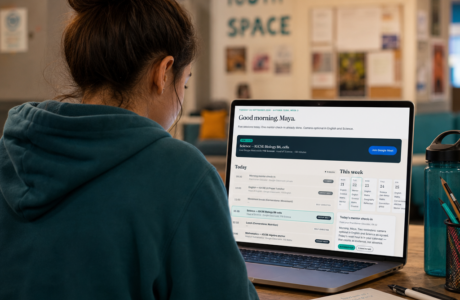
Friday is part of the open day demo — walk through the learner view and look for the week-at-a-glance card.
More articles
Go to the blog